TCM Understanding about Hay Fever

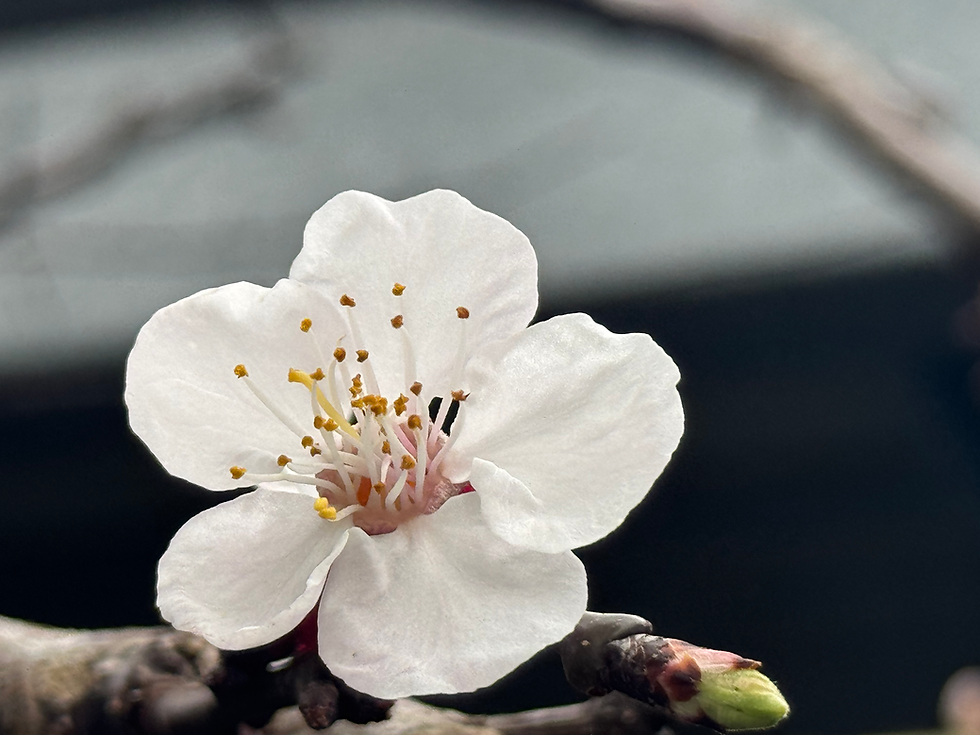
The feeling of spring is getting closer and closer. Plum blossoms, peach blossoms, and apricot blossoms are blooming one after another. Yet, while many people enjoy these beautiful signs of spring, others suffer from the misery of hay fever: itchy eyes, an itchy nose, a runny nose with clear watery discharge, and endless sneezing.
Why do these troublesome symptoms seem to arrive together with the beauty of spring?
From the perspective of Traditional Chinese Medicine (TCM), “When the righteous qi is preserved within, pathogenic factors cannot invade.” Pollen is certainly one of the triggers, but why is it that not everyone develops hay fever? The fundamental reason, from a TCM perspective, lies within the individual—the zheng qi (righteous qi) is insufficient and the body’s internal balance has been disturbed.
In TCM, itching is commonly associated with Wind. The formation of wind is primarily related to differences in temperature. When one area is warmer and another is colder, air moves rapidly from the warmer area towards the colder area, creating wind. The greater the temperature difference, the stronger the wind.
As the temperature outside rises in spring, if Cold has become lodged within the body, a temperature difference can develop between the interior and the exterior of the body, creating Wind.

When Cold invades the body, it may often remain in the Lungs. In TCM, the Lungs can be compared to the high mountains of nature. They play an important role in the movement of air and the storage and circulation of fluids. Just as many of the great rivers of the natural world originate in the mountains, the Lungs are also considered an important organ supporting the movement of fluids throughout the body.
When the body is exposed to external Wind-Cold, or when too many cold drinks are consumed, this Cold and retained fluid may become iced in the Lungs. When spring arrives and the temperature outside rises, the "ICE" retained in the Lungs begins to “melt.” This is why many people experience a continuous flow of clear, watery nasal discharge.
From a TCM perspective, this clear fluid flowing from the nose represents Wind-Cold and retained fluids that have been stored in the Lungs. When excessive Cold and fluids occupy the Lung and nasal region, the body’s normal fluids may fail to reach and nourish these areas. This explains why some people can experience a paradoxical combination of a constantly runny nose together with dryness and soreness of the nose and throat.

Therefore, the focus of treatment is not simply to stop the clear nasal discharge. Instead, the aim is to help the body transform and eliminate the retained Cold and fluids from the Lungs and nasal passages, allowing the body’s proper fluids to circulate normally again.
In other words, the goal is to allow the real spring to enter the body.
This is why I often tell my patients that the key seasons for preventing hay fever are actually summer and winter.
In summer, try to reduce the consumption of cold drinks and avoid spending too much time in air-conditioned environments. Allow yourself to sweat a little every day through appropriate physical activity. In winter, dress warmly and protect yourself from excessive exposure to external Cold.
By taking care of the body during these two seasons, the severity of hay fever when spring arrives may be significantly reduced.
When hay fever does occur, some simple supportive measures may also help. For example, moxibustion, gently steaming the nose and eyes with warm herbal tea, and soaking the feet in warm water before bed can help warm the body and support the movement and elimination of retained Cold and fluids.
Rather than fighting the symptoms of spring, TCM seeks to understand why the body reacts to spring in this way.
When the body’s internal balance is restored and its zheng qi is strengthened, perhaps the beautiful spring outside can also become a spring within.
Comments